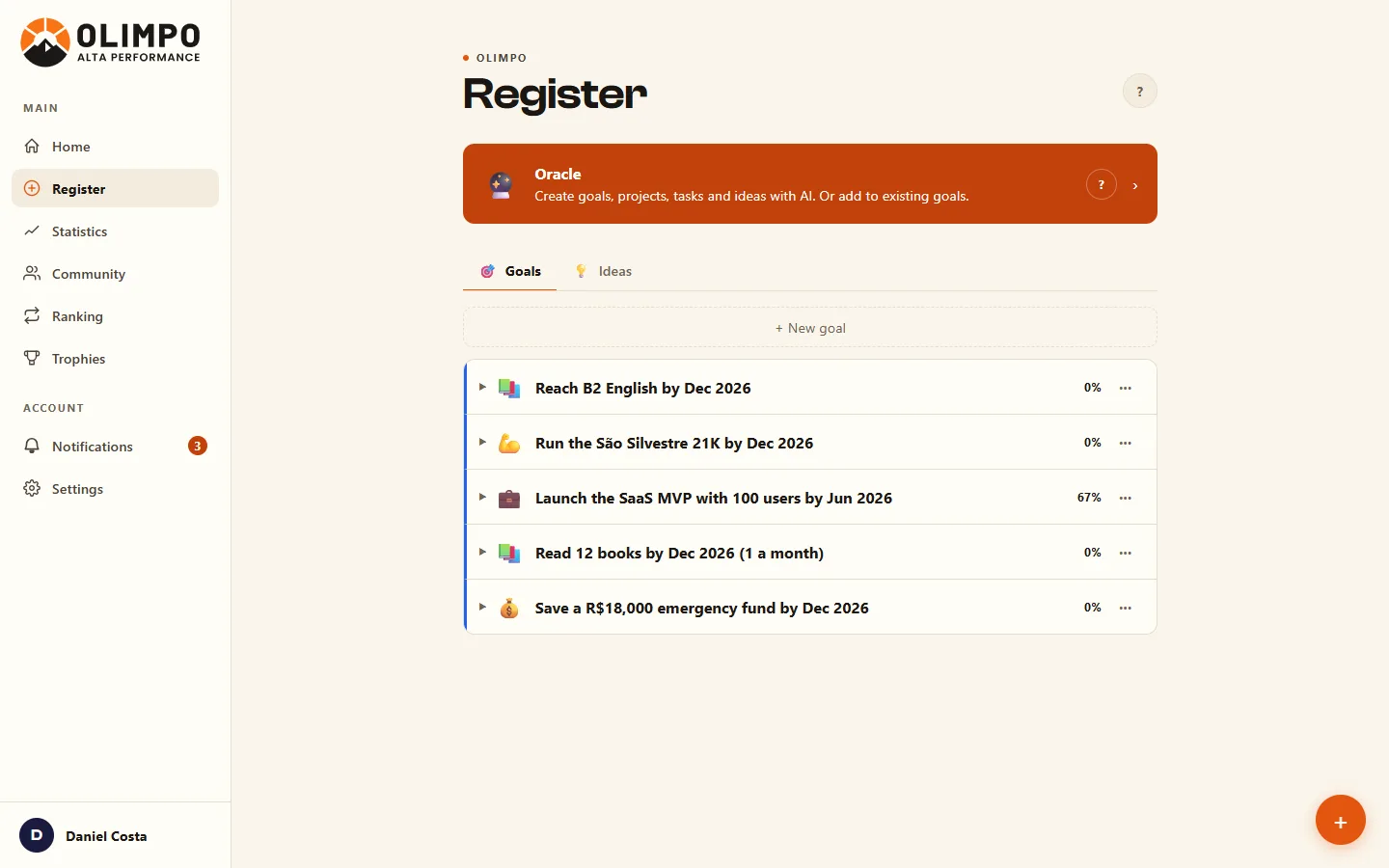
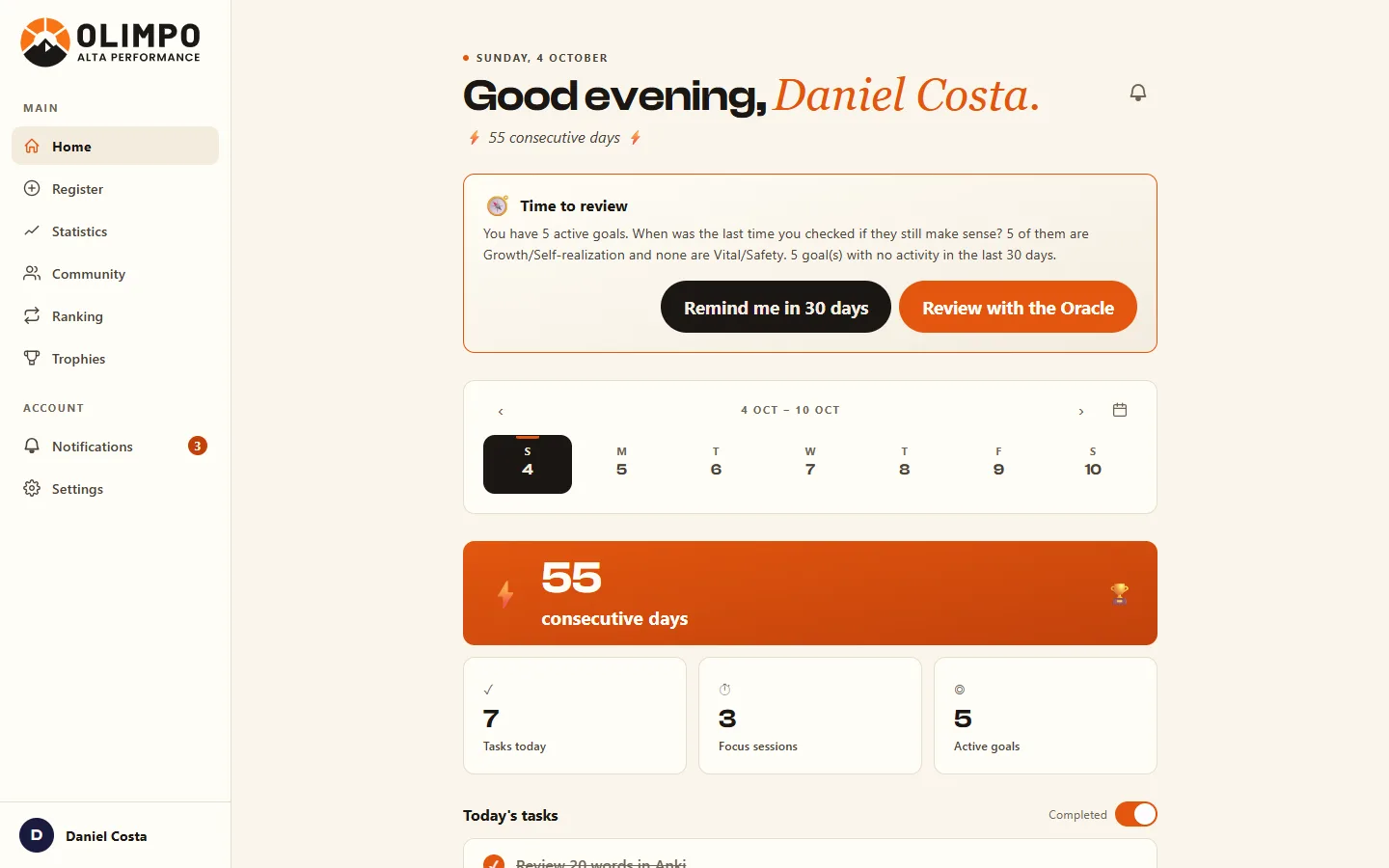
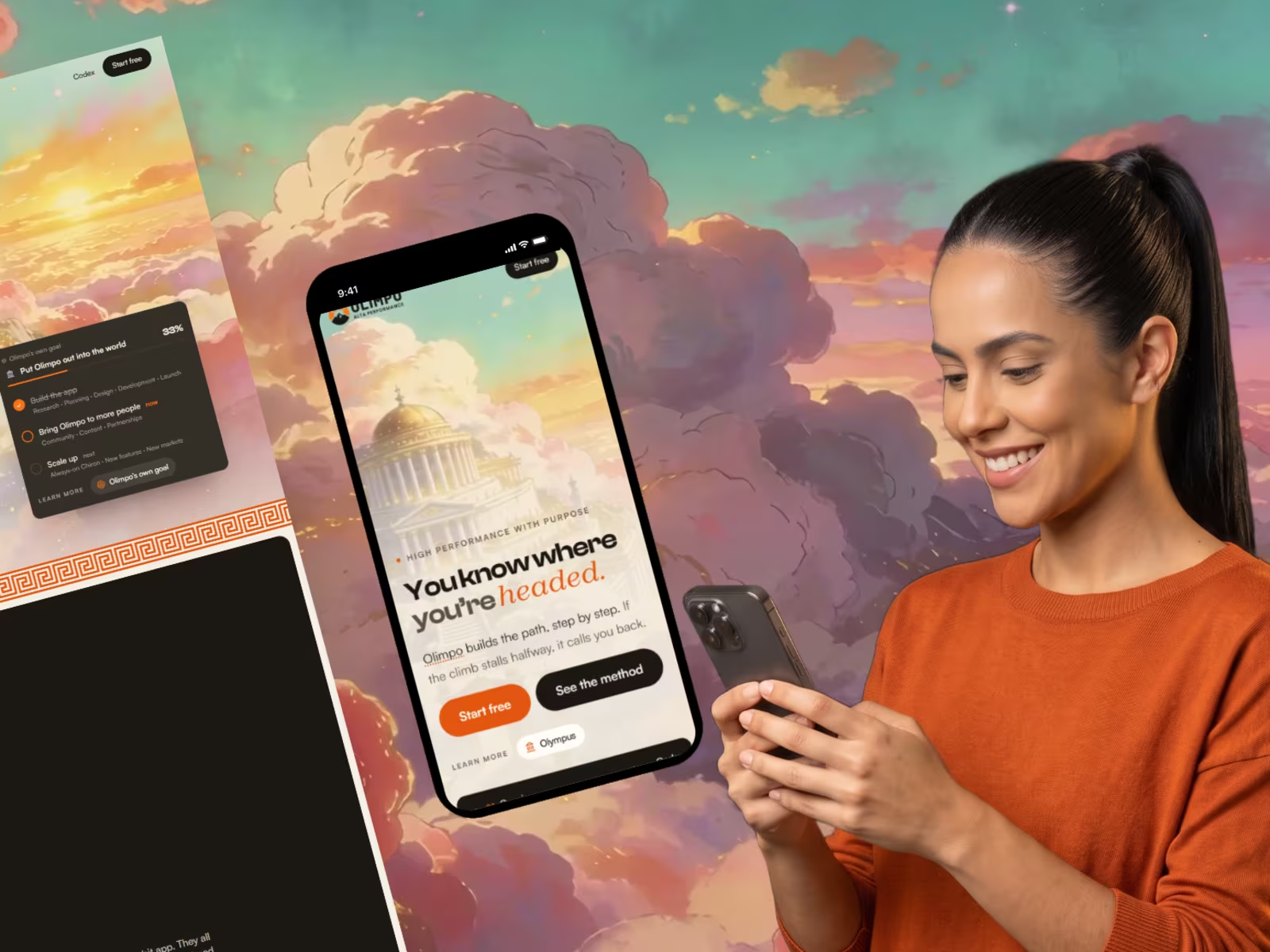
The method comes from psychology: break the goal into steps that fit in a day, make the first one small and show progress on the same day.
The mythology is how the app tells it. The hero’s journey is the oldest way of telling a change, and a climb with a mentor, trials and restarts is more human than a list of tasks. Each name in the app points to a myth and to the research behind the feature.
| Name | In the app | The myth | The research |
| Olimpo | A goal is split into projects and tasks that fit in a day. | Nobody reached the summit of Olympus in one leap. | Behavioral activation: a small step comes before the will. |
| The Oracle | The planner. A goal said in plain words comes back with a deadline, projects and dated tasks. | The Greeks took their big question to Delphi. The Pythia answered in riddles, and this one answers with a plan. | Implementation intentions: a task with a set day gets done more often. |
| Chiron | The coach. When a goal stalls, he leaves a question, never an alert. | Chiron trained the heroes and never fought in their place. | Self-determination theory: the will lasts longer when the choice stays with the person. |
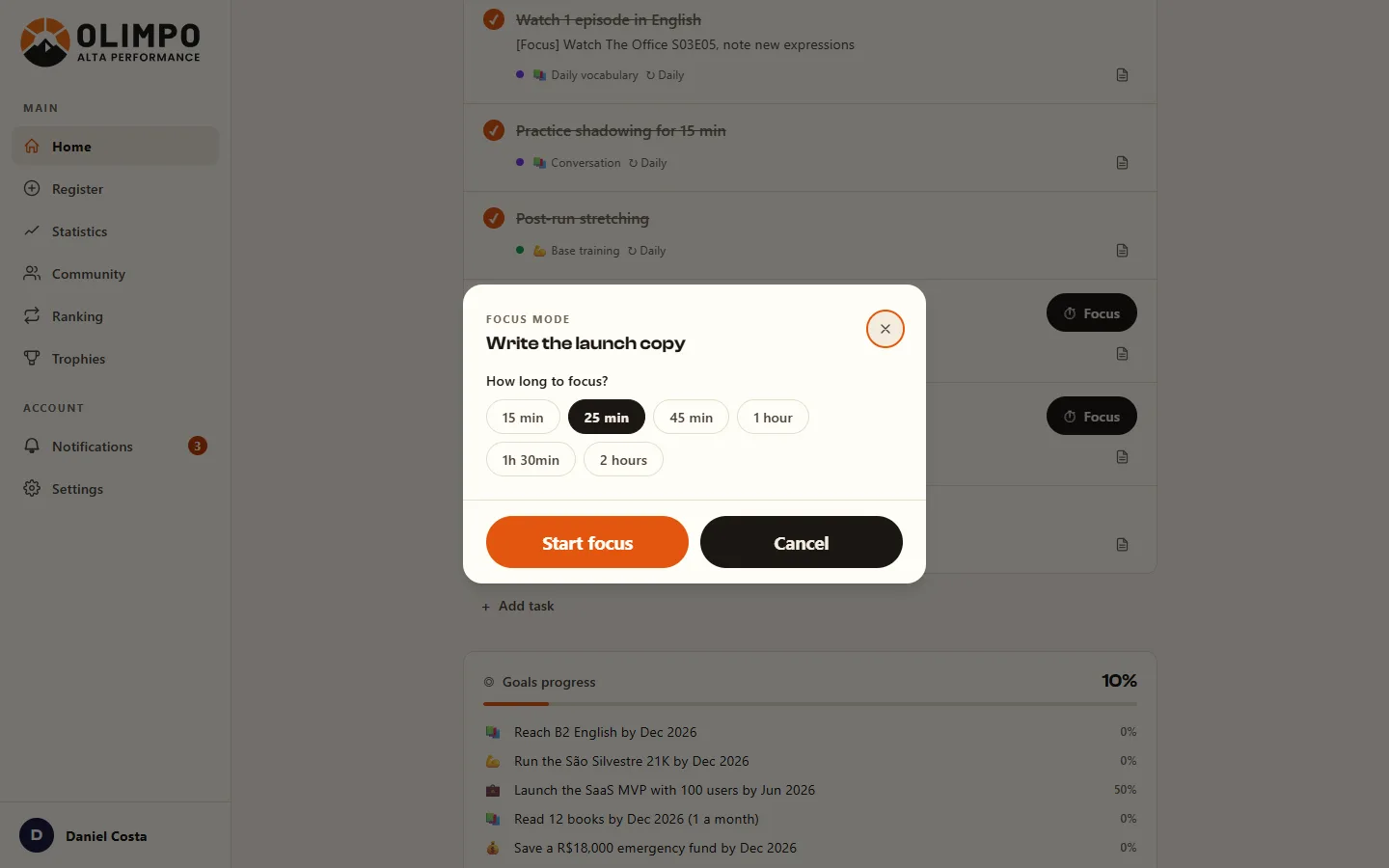
| Focus Mode | A session opens with one minute of guided breathing. | In the hero’s journey, crossing the threshold starts the adventure. | Event boundaries: a marked passage helps the mind switch context. |
| Morpheus’s poppies | Every break is recorded as rest and earns its own achievements. | Morpheus is the god of dreams, son of Sleep. | Sleep restriction studies: too little sleep lowers attention without the person noticing. |
| The 16 archetypes | Each personality type has a Greek deity. The plan makes up for the blind spot of the type. | “Know thyself” was carved at the entrance of the temple of Delphi. | The questionnaire shows a tendency, and the app never treats it as a fixed trait. |